

Rask dom: Style is not decoration. It decides what the viewer believes about your character before they read a single detail. The test is simple: one fantasy, three styles, one locked scenario — the same sorceress, the same candlelit library, the same brass key, rendered realistic, anime, and painterly. Realistic shows every flaw, anime risks making an adult read young, painterly hides flaws in brushwork and sells mood. In this guide you will run one fantasy through all three and learn which style carries which scene — for 104 credits if you build one base image and vary it twice. Priser sjekket 13 nov 2026.
Contents
- The test: one fantasy, three styles
- Lock the fantasy first
- Realistic: the style that forgives nothing
- Anime: the style that simplifies everything
- Painterly: the style that paints the light
- What stays the same: the prompt spine
- What breaks in each style
- What three styles cost
- Consent and safety
- Frequently asked questions
| Stil | What it keeps | What it changes | Best for | Cost per image |
|---|---|---|---|---|
| Realistic | Skin texture, real light, small imperfections | Nothing — every flaw is visible | Portraits, close-ups, believable people | 6 kreditter |
| Anime | Pose, composition, costume, farge | Face, line, shading — everything simplifies | Stylised characters, bold colour, series | 6 kreditter (text-to-image) / 49 (image-to-image) |
| Painterly | Pose, costume, stemning, warm light | Detail dissolves into brushwork | Atmosphere, period scenes, romance | 6 kreditter (text-to-image) / 49 (image-to-image) |
1. The test: one fantasy, three styles
Most people choose a style the way they choose a filter: by mood, in the moment, and then they blame the model when the result looks wrong. The style is not a filter. It is the single biggest decision in the image, bigger than the pose and bigger than the lighting, because it changes what the viewer is allowed to believe. A realistic image invites the viewer to check details. An anime image invites the viewer to accept symbols. A painterly image invites the viewer to feel the room. Same fantasy, three different contracts with the viewer.
The fantasy for this guide is deliberately specific: a sorceress in her late twenties, deep red velvet gown, standing in a candlelit library at midnight, holding an old brass key, a black cat asleep on the desk beside her. It is niche enough to be interesting and concrete enough to survive three renderings. A concrete fantasy gives each style something to work with and something to get wrong.
2. Lock the fantasy first
Before you touch a style, write the fantasy down in one paragraph and freeze it. Who is she? Where is she? What is she doing? What is the one object that proves the scene? For our test: a sorceress, late twenties, red velvet gown, bibliotek i levende lys, midnight, brass key in her right hand, black cat asleep on the desk. Five facts. Nothing else changes across the three versions — not the gown, not the hour, not the cat.
The lock matters because style tests fail the moment two things change at once. If the realistic version has a red gown and the anime version has a blue one, you have not tested style. You have tested two different images. Keep the costume, the pose, the framing, and the palette identical, and let only the rendering change. When the anime version comes back with a different gown, that is the style talking, and you have learned something. When you changed the gown yourself, you have learned nothing.
Write the lock as a spine you can reuse. One sentence for the character, one for the place, one for the action, one for the object. “A sorceress in her late twenties in a deep red velvet gown. A candlelit library at midnight. She stands by the desk, turning an old brass key in her fingers. A black cat sleeps on the desk beside her.” That spine goes into every version. The style words go on top of it, never instead of it.
3. Realistic: the style that forgives nothing
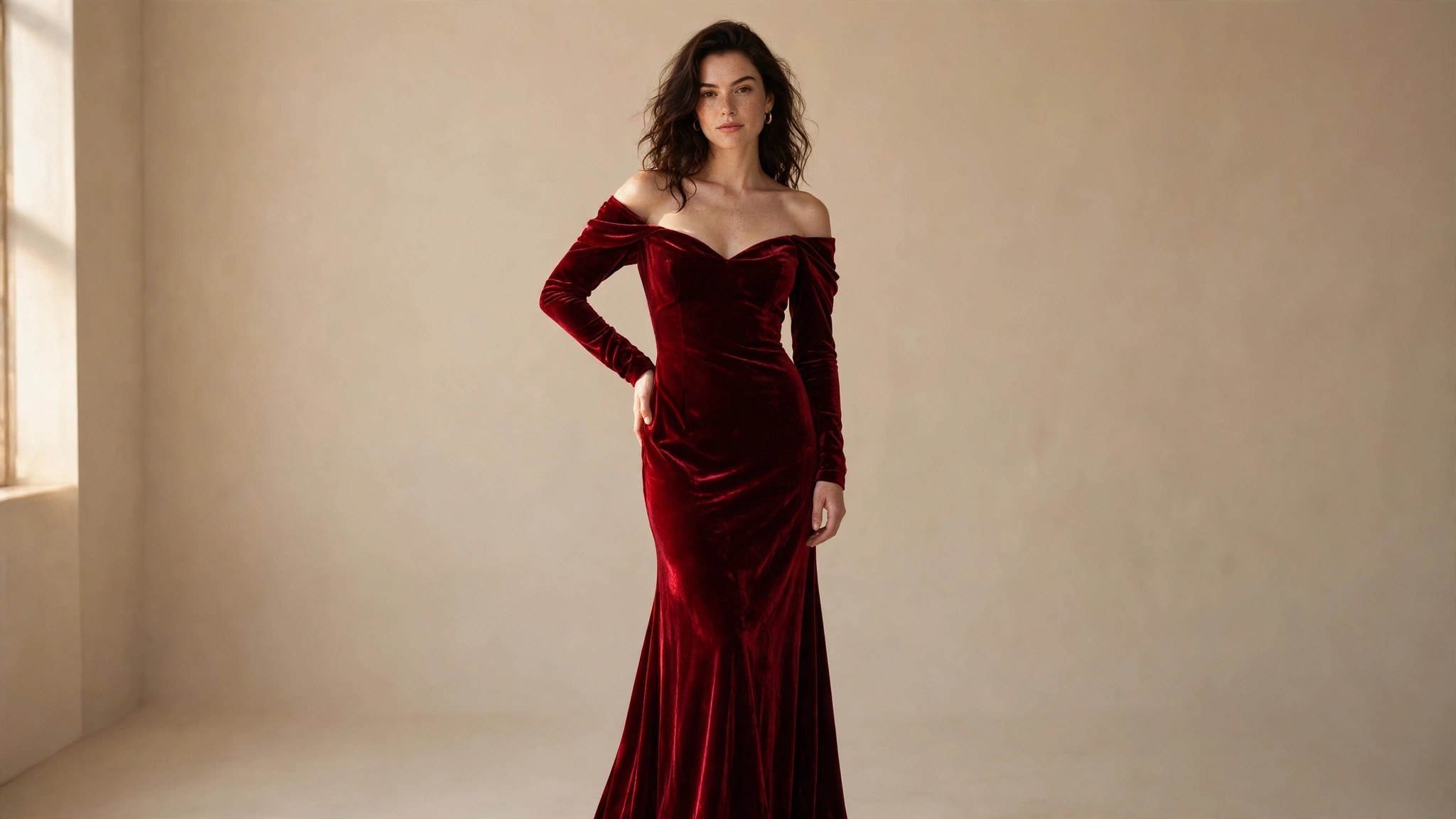
Realistic is the honest style. It shows skin texture, pores, stray hairs, the crease in a velvet gown, the wax dripping down a candle. That honesty is its strength and its punishment: everything you did not describe shows up as a flaw, and everything you described wrong shows up twice as large. A realistic image of our sorceress works when the details are right — the key has teeth, the cat has whiskers, the candlelight falls on one side of her face — and falls apart the moment one detail is wrong, because the viewer has a lifetime of real rooms to compare it against.
Use realistic when the scene needs to be believed. Portraits, close-ups, anything where the viewer will look at the face for more than a second. Realistic is also the best base for the other two styles: generate the realistic version first, then use image-to-image to restyle it, and the composition survives the trip. The realistic version is the anchor. The other two are variations.
4. Anime: the style that simplifies everything
Anime does not render the world. It summarises it. Skin becomes one flat tone with a blush mark. Hair becomes five shapes with a shine line. A candle becomes a flame shape and a glow circle. That simplification is why anime looks clean — and why it is the riskiest style in this test. Simplification removes the very details that tell the viewer a character is an adult: skin texture, fine lines, the weight of a real body in a real gown.
That risk is manageable, and it is the whole point of testing it. Keep the adult markers explicit in the prompt: a woman in her late twenties, mature features, an adult figure in a fitted gown, a calm and confident expression. Keep the proportions adult — long limbs, a real waist, a face that is not a circle with eyes. And check the result with the same eyes you would use for a photograph. If the character reads younger than the woman you described, the style has simplified too far. Add the adult markers back, regenerate, and check again. Do not publish a version that reads as a minor. Ever.
Use anime when the scene needs bold colour and clean shapes. A sorceress in a red gown against dark shelves is a poster, and anime makes posters.
5. Painterly: the style that paints the light
Painterly is the style of mood. Brushstrokes replace detail, warm light replaces accuracy, and the image reads like a painting you could hang on a wall. Our sorceress in a candlelit library is a painterly scene by nature: warm candlelight, dark wood, red velvet, gold key. The style does not need to be told what to do with that palette. It already knows.
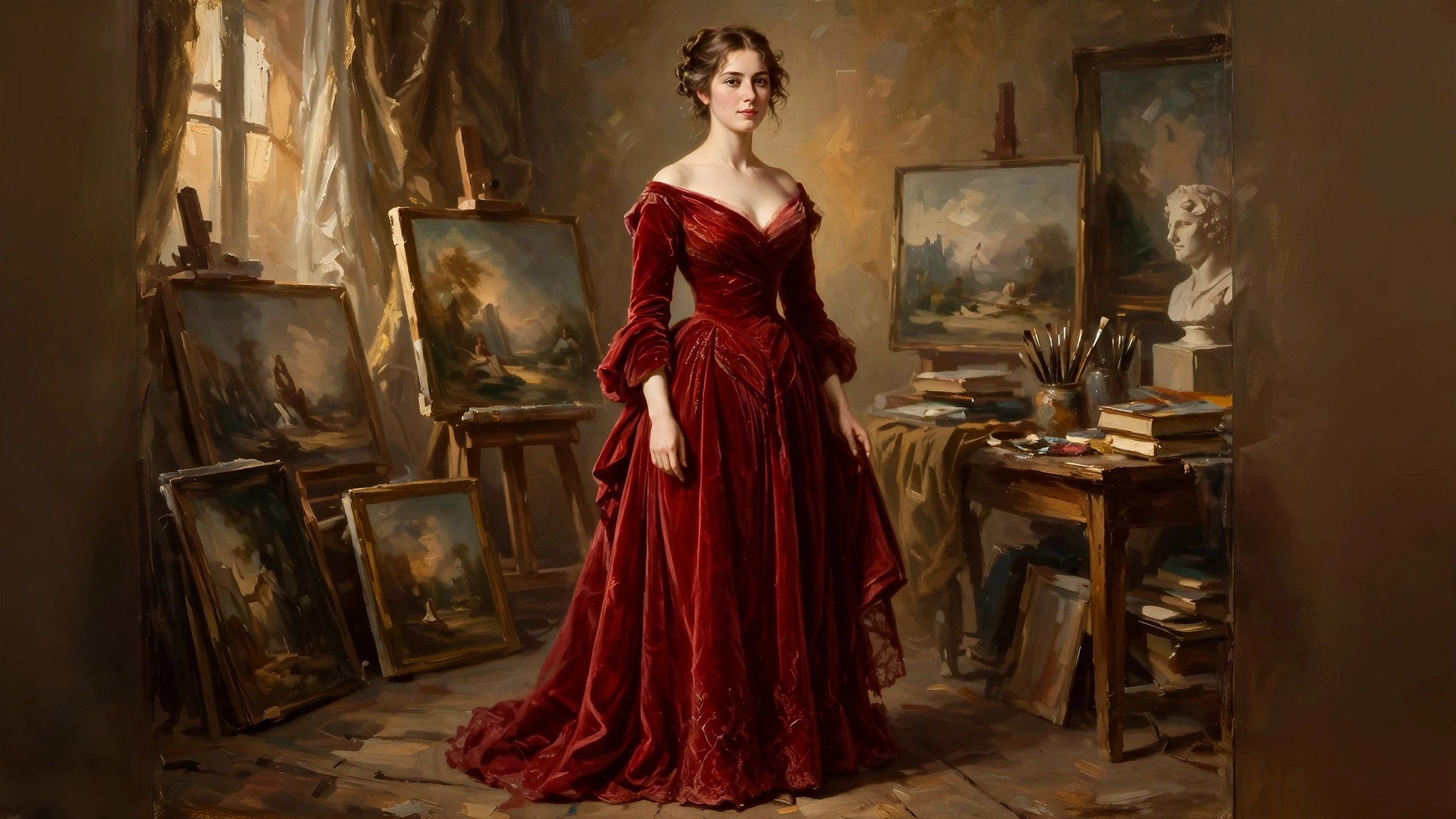
Use painterly when the scene needs atmosphere more than accuracy. Period settings, romance, anything where the feeling matters more than the face. Painterly is also the most forgiving style for hands and small objects: a brushstroke can be a finger, and nobody checks. If realistic keeps breaking the brass key, painterly will paint it well enough that nobody looks twice.
The cost of painterly is detail. Faces soften, fabric loses its weave, the cat becomes a black shape with two eyes. If the scene depends on a specific detail — the teeth of the key, the title on a book spine — painterly will eat it. Do not ask a painterly image to prove a detail. Ask it to prove a mood, and it will.
6. What stays the same: the prompt spine
Three styles, one spine. The spine is the part of the prompt that never changes: character, place, action, object, palette, framing. Skriv det én gang, then add style words on top. Here is the spine for our test: “A sorceress in her late twenties, deep red velvet gown, standing in a candlelit library at midnight, turning an old brass key in her fingers, a black cat asleep on the desk beside her, full body, warm candlelight from the left.”
Then the style line, one sentence each. Realistic: “Fotorealistisk, high detail skin texture, natural light falloff, cinematic.” Anime: “Clean anime style, bold flat colour, simple shading, strong outlines.” Painterly: “Classical oil painting, visible brushstrokes, warm chiaroscuro, rich shadows.” The spine does the describing. The style line does the rendering. Keep them separate and you can swap styles without rewriting the scene.
7. What breaks in each style
Every style has a failure mode, and knowing it in advance saves credits. Realistic breaks on hands, teeth, and small objects — the key, the cat’s whiskers, the candle flame. It also breaks on skin: too smooth and it looks plastic, too textured and it looks dirty. The fix is targeted editing, not regeneration. Fix the hand, keep the image.
Anime breaks on age. The simplification that makes anime clean also removes the markers of adulthood, and a character described as twenty-eight can come back looking sixteen. The fix is in the prompt, not the model: adult proportions, mature features, a fitted gown on an adult figure, and a hard check of the result before you publish. If it reads young, it does not ship. There is no exception to that rule, and no style is worth breaking it.
Painterly breaks on detail and on faces. A painterly face can slide into a smear, and a painterly hand can dissolve into the sleeve. The fix is to ask less of it: keep the face in three-quarter view, keep the hands simple, let the light do the work. Painterly is not the style for a close-up of a key. It is the style for a room full of candlelight.
8. What three styles cost
The cheapest way to run the test is one base image plus two variations. Generate the realistic version first with the AI-pornogenerator — a standard image costs 6 kreditter ($0.12 på $19.99 pakke, $0.07 på $59.99 pakke). Then use image-to-image to restyle it twice, once anime and once painterly, at 49 credits each ($0.98 / $0.59). Total: 104 credits — $2.08 på $19.99 pakke, $1.25 på $59.99 pakke. The composition survives the restyle, so the three images are genuinely comparable.
The other way is three images from scratch: three text-to-image renders at 6 credits each, 18 credits total ($0.36 / $0.22). Cheaper, but the three images will not match — different poses, different framing, different cats.
A 5-second video of one version costs 351 kreditter ($7.02 / $4.21), and an 8-second version costs 561 kreditter ($11.22 / $6.73). Priser sjekket 13 nov 2026.
The free tier helps here: the homepage offers one free image preview per IP with no sign-up, so the base realistic image can be the free one and the two variations are the only paid step. That brings the test down to 98 credits of paid generation. Check the AI-pornovideogenerator page for the exact video price before you generate, since video prices are shown before you spend.
9. Consent and safety
Every person in these images is fictional and an adult. That is not a disclaimer at the bottom. It is the rule that shapes the whole test. The sorceress is invented. The gown is invented. The library is invented. Nothing in the test is a real person, and nothing in it is meant to look like one.
Do not use a real person’s photo or name as the base for a style test. Style transfer on a real face is still that person’s face, whatever the style. The test works on invented characters and needs nothing real.
Anime deserves a second warning here. Because the style simplifies faces, an anime render can make an adult character read as a minor even when the prompt says otherwise. Check every anime result the way you would check a photograph: does this person read as an adult? If the answer is not a clear yes, do not use the image. Strengthen the adult markers in the prompt and regenerate. A style is never an excuse for an ambiguous result.
Frequently asked questions
Do I need three separate prompts for three styles?
Nei. Write one prompt spine — character, place, action, object, palette — and add one style line on top for each version. The spine stays identical, the style line changes. That is the whole test: one fantasy, three styles, one locked scenario.
Which style is cheapest to test first?
Painterly, because it forgives the most. A painterly render tells you whether the mood and composition work before you spend anything on detail. If the painterly version feels wrong, the fantasy is wrong, and no realistic render will fix it. Test mood first, detail second.
Why does my anime version look younger than my realistic one?
Because anime simplifies faces, and simplification removes the markers of adulthood: skin texture, fine lines, the weight of a real body. Add adult markers to the prompt — late twenties, mature features, adult proportions, a fitted gown — and check the result before you use it. If it still reads young, do not ship it.
Can I mix styles in one image?
Ja, and it usually works best as a light touch: a realistic portrait with painterly light, or an anime character in a painterly room. Name one style as the base and the other as an accent. Two equal styles in one prompt fight each other, and the image comes back confused about what it is.
What does the three-style test cost?
One base image (6 kreditter) plus two image-to-image variations (49 each) is 104 credits — $2.08 på $19.99 pakke, $1.25 på $59.99 pakke. Three images from scratch are 18 kreditter ($0.36 / $0.22), but they will not match, so the comparison is weaker. A 5-second video of the winner is 351 kreditter ($7.02 / $4.21). Priser sjekket 13 nov 2026.
Is it okay to base the fantasy on a real place I know?
Ja, if it is a place and not a person. A library you love, a tavern you have visited, a cabin you stayed in — all fine as inspiration. Do not put a real, identifiable person into the scene, do not use a real person’s photo as the base, and do not recreate a real person’s private space as the backdrop for someone else’s image.
Les videre: Niche Worldbuilding: Settings That Make a Fantasy Scenario Feel Real · AI-pornorollespillscenarier: En scene med en historie, Ikke bare et kostyme · Cosplay AI-porno: Karakterer fra kostyme til scene