

A costume is a photo. A scene with a story is a set. The first article on this site showed how to generate the exact style, scenario and look you want. The second showed how to prompt a niche without breaking the filter. The third showed how a costume becomes a character. This one goes one step further: a scene with a story, not just a costume — how to build a roleplay scenario where the character, the situation and the dialogue all point the same way.
This guide is about roleplay scenarios for AI porn in 2026: the three parts every scene needs, a beat sheet you can reuse, the lines that carry a scene, and the mistakes that break one. It is written for fictional adult characters only. The consent rule is absolute: generate images and videos of yourself, or of fictional adults, and never of a real person without their consent.
Quick verdict
Write the scene before the costume: one character, one situation, three beats. A scene with a story survives a bad outfit; a good outfit never saves a scene with no story.
In this guide
- 1. What a roleplay scenario is
- 2. The three parts: who, where, what happens
- 3. The beat sheet: arrival, tension, turn, payoff
- 4. Dialogue beats: three lines that carry the scene
- 5. When the costume breaks the story
- 6. One character, three scenes, 15 minutes
- 7. What to check before you pay
- Cost: a scene in five images
- 8. Consent: the rule that decides everything
- FAQ
Costume-first vs story-first, side by side
| Costume-first | Story-first | |
|---|---|---|
| Starts with | The outfit | The situation |
| Second image | Same outfit, new pose | Same scene, next beat |
| What carries it | One look | Three beats |
| Feels like | A catalogue | A scene with a story |
| Reuses well | Rarely | Every time |
The table is the whole guide in one place. Two approaches, one winner, and the winner is the story. The rest of this guide is each row in detail: what it does, and what it costs.
1. What a roleplay scenario is
A roleplay scenario is a scene with a story: a fictional adult character, in a situation, doing something that changes. The costume is one detail. The story is the scene. A scene with a story has a beginning, a middle and an end — even when it is only five images long.
And the scenario is the truth: a truth does not flatter, and a truth does not lie. A truth says which scenes work, and which scenes work is the truth. Check the truth, and the checking is the saving.
And the scenario is one tell: one tell, one character, one situation. One tell is the situation, and the situation is one tell.
2. The three parts: who, where, what happens
Every scene has three parts. Who: one fictional adult character, with a name you invented, a job, and one habit. Where: one place, with light and an hour. What happens: one thing that changes — a door opens, a secret is told, a storm arrives. Three parts, one scene, and the scene is the three.

Take an invented example: Wren Halloway, a lighthouse keeper, alone on a cliff at dusk, who finds a letter she never sent. The costume is a heavy wool coat and a lantern. The story is the letter. A scene with a story is what makes the coat worth looking at.
And the three are one tell: one tell, one who, one where. One tell is the where, and the where is one tell.
And the three are the proof: a proof that is three is a proof that is clear, and a proof that is clear is a proof that is safe. Check the proof, and the checking is the saving.
3. The beat sheet: arrival, tension, turn, payoff
Four beats carry any scene. Arrival: the character enters the place. Tension: something is wrong or wanted. Turn: the thing changes. Payoff: the scene lands. Four beats, five images, and the images are the four. A scene with a story is four beats in order — skip one and the scene wobbles.
And the beats are one tell: one tell, one arrival, one turn. One tell is the turn, and the turn is one tell.
And the beats are the habit: a habit that repeats is a habit that teaches, and a habit that teaches is a habit that keeps. Write four, and the four is the habit.
4. Dialogue beats: three lines that carry the scene
Three lines carry a scene: one line that sets it, one line that breaks it, one line that lands it. “You came back.” “I never left.” “Then stay.” Short lines, long silences, and the silence is the line. A scene with a story is three lines and the space between them.
And the lines are one tell: one tell, one set, one break. One tell is the break, and the break is one tell.
And the lines are the proof: a proof that is three is a proof that is clear, and a proof that is clear is a proof that is safe. Check the proof, and the checking is the saving.
5. When the costume breaks the story
A costume breaks a scene when it belongs to a different story: a ball gown in a lighthouse, a uniform with no job, a mask with no reason. Three breaks, one scene, and the scene is the three. The fix is one sentence: say why she wears it, and the wearing is the why. A scene with a story gives every detail a reason.
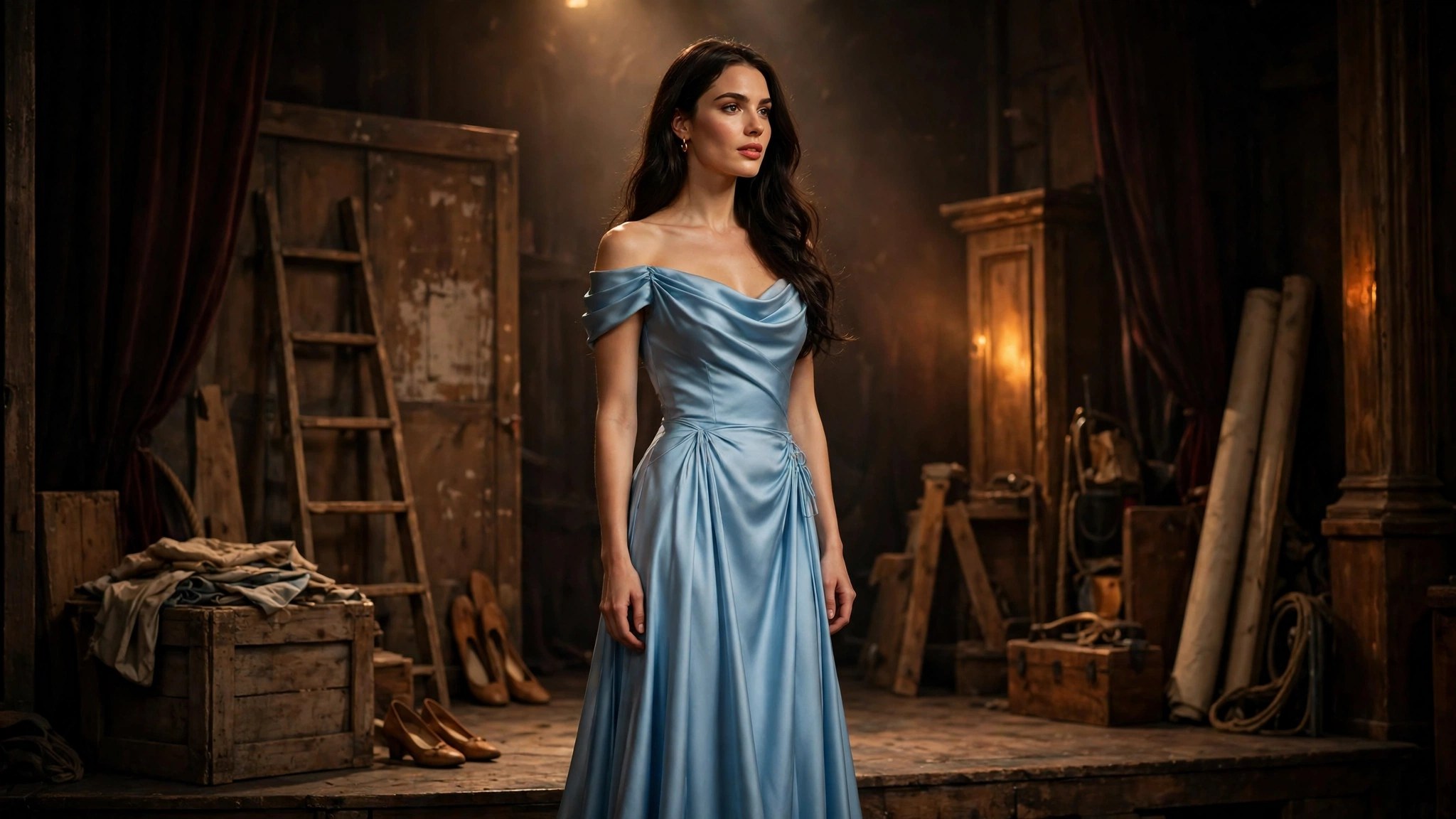
And the break is one tell: one tell, one gown, one lighthouse. One tell is the lighthouse, and the lighthouse is one tell.
And the break is the habit: a habit that repeats is a habit that teaches, and a habit that teaches is a habit that keeps. Give a reason, and the reason is the habit.
6. One character, three scenes, 15 minutes
The workflow takes 15 minutes: five minutes to write the three parts, five minutes to generate the first scene, and five minutes to change one thing per scene — the hour, the place, the beat — while the character stays the same. Three fives, one character, and the character is the three. A scene with a story is the same character in three situations.
And the workflow is one workflow: one workflow, one character, three scenes. One workflow is the scenes, and the scenes are one workflow.
And the workflow is the habit: a habit that repeats is a habit that teaches, and a habit that teaches is a habit that keeps. Work fifteen, and the fifteen is the habit.
7. What to check before you pay
Check three things before you pay: the character is yours or fictional, the scene has four beats in order, and the generator shows the cost before you run it. Three checks, one payment, and the payment is the three. Check, check, check — and the checking is the paying.
And the checking is one check: one check, one scene, one story. One check is the story, and the story is one check.
And the checking is the habit: a habit that repeats is a habit that teaches, and a habit that teaches is a habit that keeps. Check three, and the checking is the habit.
Cost: a scene in five images
One scene, five images, one price each: an image-to-image generation is 49 credits — roughly $0.98 on the $19.99 pack and $0.59 on the $59.99 pack. Five images at 49 credits is 245 credits — roughly $4.90 on the $19.99 pack and $2.94 on the $59.99 pack. A standard text-to-image generation is 6 credits — roughly $0.12 on the $19.99 pack and $0.07 on the $59.99 pack, so five standard images is 30 credits — roughly $0.60 and $0.36. A face swap is 26 credits — roughly $0.52 and $0.31. A five-second video is 351 credits — roughly $7.02 and $4.21. Prices checked 13 Nov 2026; the generator shows the exact cost before you run it, so the price is never a surprise.
And that is why five is the saving: five images that tell a story are five images that are kept, and five images that are kept are five images that are one scene. Make five, and the making is the saving.
The free baseline still stands: free image preview per IP, no sign-up. Start free, and the starting is the testing.
8. Consent: the rule that decides everything
Only generate images and videos of yourself, or of fictional adults. Never generate an image or a video of a real person without their consent — not a celebrity, not an acquaintance, not a stranger. Non-consensual generation is not allowed, and a generated image is harder to take back than a photo once shared. The tool is built for your own images and fictional adults, and that boundary is absolute.
This is also practical, not just ethical: images made with consent are usually better inputs and better results. They are shot properly, well lit, front-facing — because the person knew they were being photographed. A stolen or secret photo is usually dark, cropped, or shot from a bad angle, which is also a bad input. Consent and quality point the same way — and safety is the proof: a site that enforces consent is a site that teaches, and a site that teaches is a site that keeps.
FAQ
What is a roleplay scenario?
A scene with a story: a fictional adult character, in a situation, doing something that changes. It has three parts — who, where, what happens — and four beats: arrival, tension, turn, payoff.
How is a scenario different from a costume?
A costume is one look. A scenario is a scene with a story: the same character in a situation with beats and dialogue. A good outfit never saves a scene with no story.
How many beats does a scene need?
Four: arrival, tension, turn, payoff. Five images carry four beats easily — one image per beat, plus one for the payoff.
Do I need dialogue in a roleplay scenario?
Three lines are enough: one that sets the scene, one that breaks it, one that lands it. Short lines and long silences carry more than a paragraph of talk.
How much does a five-image scene cost?
Five image-to-image generations at 49 credits is 245 credits — about $4.90 on the $19.99 pack and $2.94 on the $59.99 pack. Five standard images at 6 credits is 30 credits — about $0.60 and $0.36.
Can I make AI porn of a real person?
No. Only generate images of yourself, or of fictional adults. Generating an image of a real person without consent is not allowed.
Final verdict
Write the scene before the costume: one character, one situation, three beats. A scene with a story survives a bad outfit; a good outfit never saves a scene with no story.
Keep reading
- Niche AI Porn: How to Generate the Exact Style, Scenario & Look You Want (2026)
- AI Porn Fetishes & Niches: How to Prompt Without Breaking the Filter (2026)
- Cosplay AI Porn: Characters From Costume to Scene (2026)