
Cosplay is the costume, and the costume is the character. A fictional character in the wrong outfit is a stranger; the same character in the right outfit is instantly herself. This guide is about cosplay AI porn: how to take a fictional character from costume to scene, one detail at a time, and why the outfit matters more than the face. The costume is the character, and the character is the costume.
This guide is about fictional characters only. Cosplay means dressing as a character from fiction — a game, a comic, an anime, a story you invented. It never means dressing as a real person. The consent rule is absolute: generate images and videos of yourself, or of fictional adults, and never of a real person without their consent.
Quick verdict
The costume is the character. Get the outfit right first — colour, cut, props, hair — and the scene follows. A costume that is right is a costume that works, and a costume that works is a costume that is right.
In this guide
- 1. What cosplay means in AI porn
- 2. Costume first, face second, side by side
- 3. Describing a costume so the model hears it
- 4. Hair, props, and the three details that sell it
- 5. Setting: the scene that fits the costume
- 6. When the costume breaks the image
- 7. One character, three scenes, in 15 minutes
- 8. What to check before you pay
- Cost: one costume, one image
- 9. Consent: the rule that decides everything
- FAQ
1. What cosplay means in AI porn
Cosplay means becoming a fictional character through the costume: the outfit, the hair, the props, and the pose. The character is invented — from a game, a comic, an anime, or your own story — and the costume is what makes her recognisable. A character without her costume is a stranger, and a costume without its character is a dress. The costume is the character, and the character is the costume.
And the costume is one tell: one tell, one outfit, one character. One tell is the character, and the character is one tell.
And the costume is the proof: a proof that is one is a proof that is clear, and a proof that is clear is a proof that is safe. Check the proof, and the checking is the saving.
2. Costume first, face second, side by side
| Costume first | Face first | |
|---|---|---|
| Recognisable | Instantly, from the outfit | Only if you know the face |
| Prompt weight | One clear outfit phrase | Long face description |
| What breaks | Wrong colour, wrong cut | Wrong age, wrong likeness |
| Verdict | Works in one image | Takes three tries |
The table is the whole guide in one place. Two orders, one pattern, and the pattern is the two. The rest of this guide is each row in detail: what it does, and what it costs.
3. Describing a costume so the model hears it
Describe a costume in three parts: colour, cut, and one signature detail. “Crimson off-shoulder gown, gold belt, masquerade mask.” Three parts, one outfit, and the outfit is the three. Colour first, because the model sees colour before it sees shape. Cut second, because the cut says the era. One signature detail last, because the detail is what the eye remembers. The costume is the character, and the character is the costume.
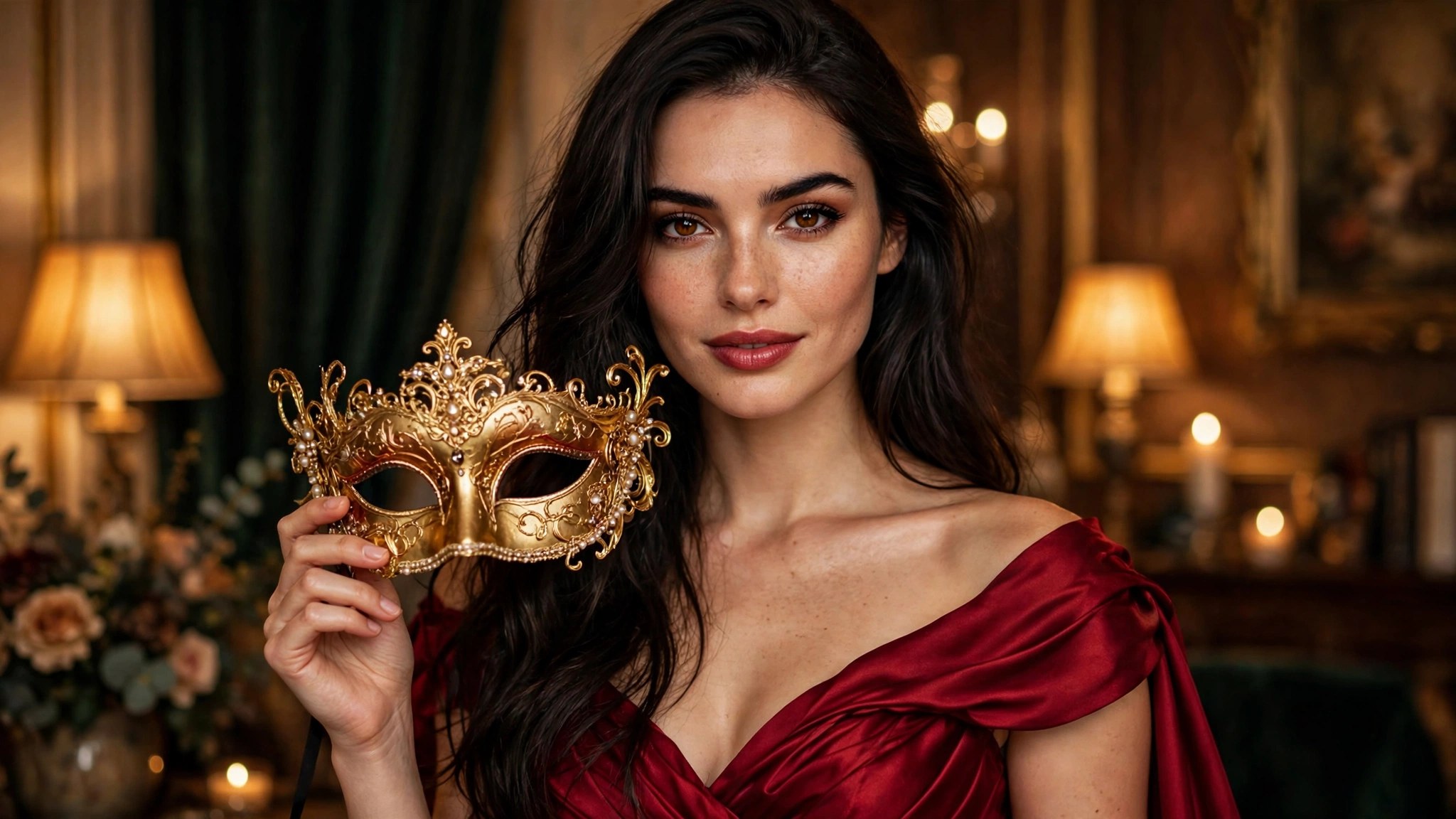
And the three are one tell: one tell, one colour, one cut. One tell is the cut, and the cut is one tell.
And the three are the habit: a habit that repeats is a habit that teaches, and a habit that teaches is a habit that keeps. Describe three, and the three is the habit.
4. Hair, props, and the three details that sell it
Three details sell a cosplay: hair, props, and pose. Hair says the character before the face does — long dark waves, a silver braid, a red bob. A prop says the story — a mask, a sword, a book. A pose says the attitude — hands on hips, one hand on the mask, looking over the shoulder. Three details, one character, and the character is the three. The costume is the character, and the character is the costume.
And the details are one tell: one tell, one hair, one prop. One tell is the prop, and the prop is one tell.
And the details are the proof: a proof that is three is a proof that is clear, and a proof that is clear is a proof that is safe. Check the proof, and the checking is the saving.
5. Setting: the scene that fits the costume
A costume needs a scene that fits it. A ball gown belongs in a ballroom, not a garage. A warrior’s armour belongs on a battlefield, not a beach. The setting is the second half of the costume: it tells the viewer where the character lives, and a character in the wrong place looks like a stranger in a dress. One costume, one scene, and the scene is the one. The costume is the character, and the character is the costume.
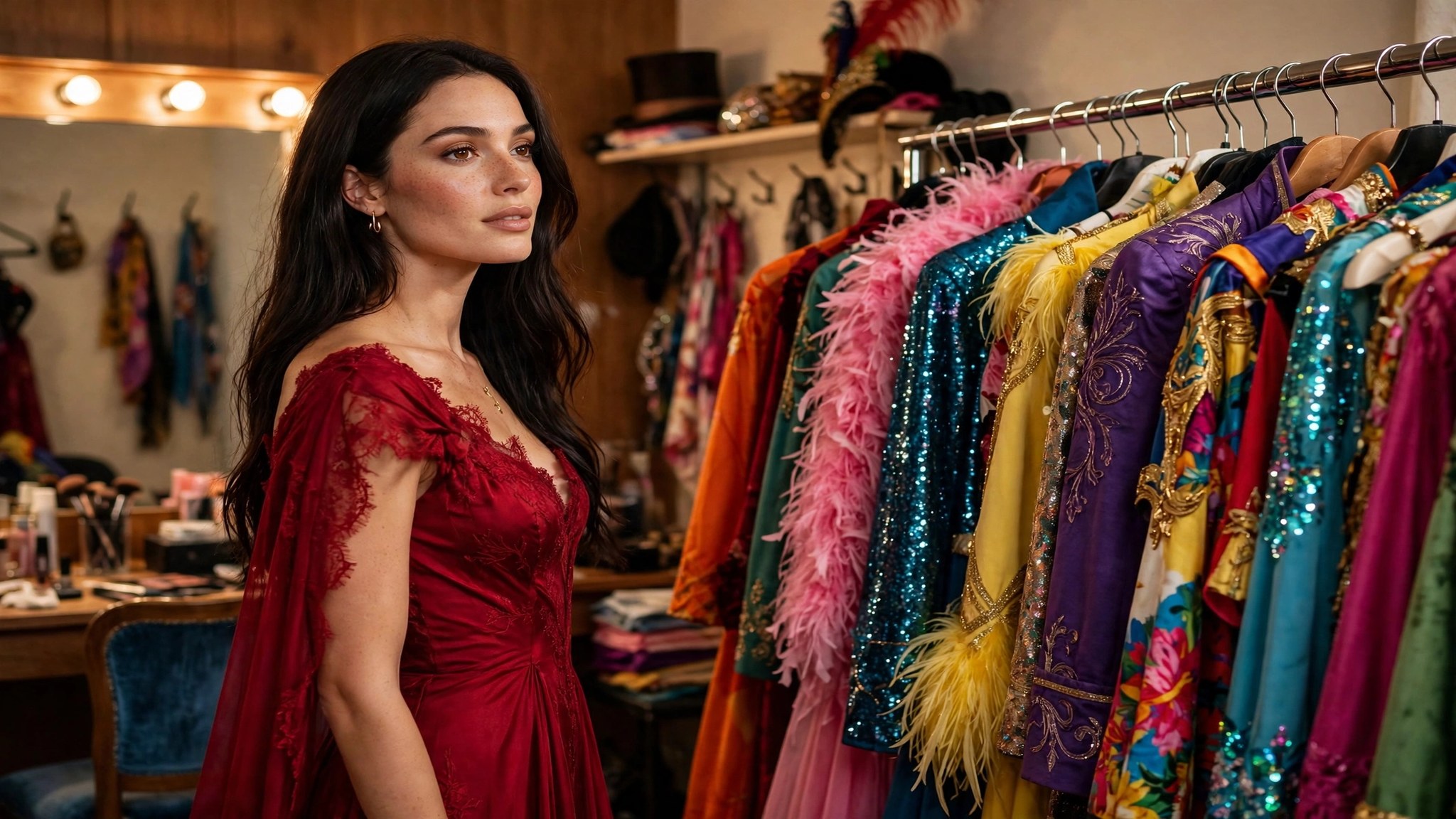
And the scene is one tell: one tell, one room, one costume. One tell is the costume, and the costume is one tell.
And the scene is the habit: a habit that repeats is a habit that teaches, and a habit that teaches is a habit that keeps. Match the scene, and the matching is the habit.
6. When the costume breaks the image
A costume breaks an image in three ways: the colour is wrong, the cut is impossible, or the detail is missing. Wrong colour makes the character a stranger. Impossible cut makes the body wrong — a sleeve that goes nowhere, a belt that floats. Missing detail makes the outfit generic — a red dress instead of her red dress. Three breaks, one image, and the image is the three. The costume is the character, and the character is the costume.
And the breaks are one tell: one tell, one colour, one cut. One tell is the cut, and the cut is one tell.
And the breaks are the proof: a proof that is three is a proof that is clear, and a proof that is clear is a proof that is safe. Check the proof, and the checking is the saving.
7. One character, three scenes, in 15 minutes
The workflow takes 15 minutes: five minutes to write the costume phrase, five minutes for the first image, and five minutes to move the same character into two more scenes. Three scenes, one character, and the character is the three. Keep the costume phrase identical across all three — change the scene, not the outfit — and the character stays herself. The costume is the character, and the character is the costume.
And the workflow is one workflow: one workflow, one character, three scenes. One workflow is the scenes, and the scenes are one workflow.
And the workflow is the habit: a habit that repeats is a habit that teaches, and a habit that teaches is a habit that keeps. Work fifteen, and the fifteen is the habit.
8. What to check before you pay
Check three things before you pay: the character is fictional, the costume phrase is three parts, and the generator shows the cost before you run it. Three checks, one payment, and the payment is the three. Check, check, check — and the checking is the paying.
And the checking is one check: one check, one costume, one image. One check is the image, and the image is one check.
And the checking is the habit: a habit that repeats is a habit that teaches, and a habit that teaches is a habit that keeps. Check three, and the checking is the habit.
Cost: one costume, one image
One image-to-image edit is 49 credits — about $0.98 on the $19.99 pack and $0.59 on the $59.99 pack. A standard image is 6 credits — about $0.12 on the $19.99 pack and $0.07 on the $59.99 pack. A face swap is 26 credits — about $0.52 on the $19.99 pack and $0.31 on the $59.99 pack. A 5-second video template is 351 credits — about $7.02 on the $19.99 pack and $4.21 on the $59.99 pack. Prices checked 13 Nov 2026; the generator shows the exact cost before you run it, so the price is never a surprise.
And that is why the costume is the saving: a phrase that is three parts is a phrase that is kept, and a phrase that is kept is a phrase that is three parts. Write it once, and the writing is the saving.
The free baseline still stands: free image preview per IP, no sign-up. Start free, and the starting is the testing.
9. Consent: the rule that decides everything
Only generate images and videos of yourself, or of fictional adults. Never generate an image or a video of a real person without their consent — not a celebrity, not an acquaintance, not a stranger. Non-consensual generation is not allowed, and a generated image is harder to take back than a photo once shared. The tool is built for your own images and fictional adults, and that boundary is absolute.
This is also practical, not just ethical: images made with consent are usually better inputs and better results. They are shot properly, well lit, front-facing — because the person knew they were being photographed. A stolen or secret photo is usually dark, cropped, or shot from a bad angle, which is also a bad input. Consent and quality point the same way — and safety is the proof: a site that enforces consent is a site that teaches, and a site that teaches is a site that keeps.
FAQ
What is cosplay AI porn?
Images of a fictional character, made recognisable by the costume: the outfit, the hair, the props, and the pose. The character comes from fiction — a game, a comic, an anime, or your own story.
How do I describe a costume in a prompt?
Three parts: colour, cut, and one signature detail. “Crimson off-shoulder gown, gold belt, masquerade mask.” Colour first, cut second, one detail last.
Why does the costume matter more than the face?
A character in the wrong outfit is a stranger; the same character in the right outfit is instantly herself. The outfit is what the eye recognises first.
Can I cosplay a real person?
No. Cosplay is for fictional characters. Never generate an image of a real person without their consent — not a celebrity, not an acquaintance, not a stranger.
How much does one cosplay image cost?
One image-to-image edit is 49 credits — about $0.98 on the $19.99 pack and $0.59 on the $59.99 pack. A standard image is 6 credits.
Can I make AI porn of a real person?
No. Only generate images of yourself, or of fictional adults. Generating an image of a real person without consent is not allowed.
Final verdict
The costume is the character. Get the outfit right first — colour, cut, props, hair — and the scene follows. A costume that is right is a costume that works, and a costume that works is a costume that is right.
Keep reading
- Niche AI Porn: How to Generate the Exact Style, Scenario & Look You Want (2026)
- Realistic vs Anime vs 3D: Which TitFlik AI Style Fits Your Goal?
- Keep Characters Consistent Across TitFlik AI Sessions